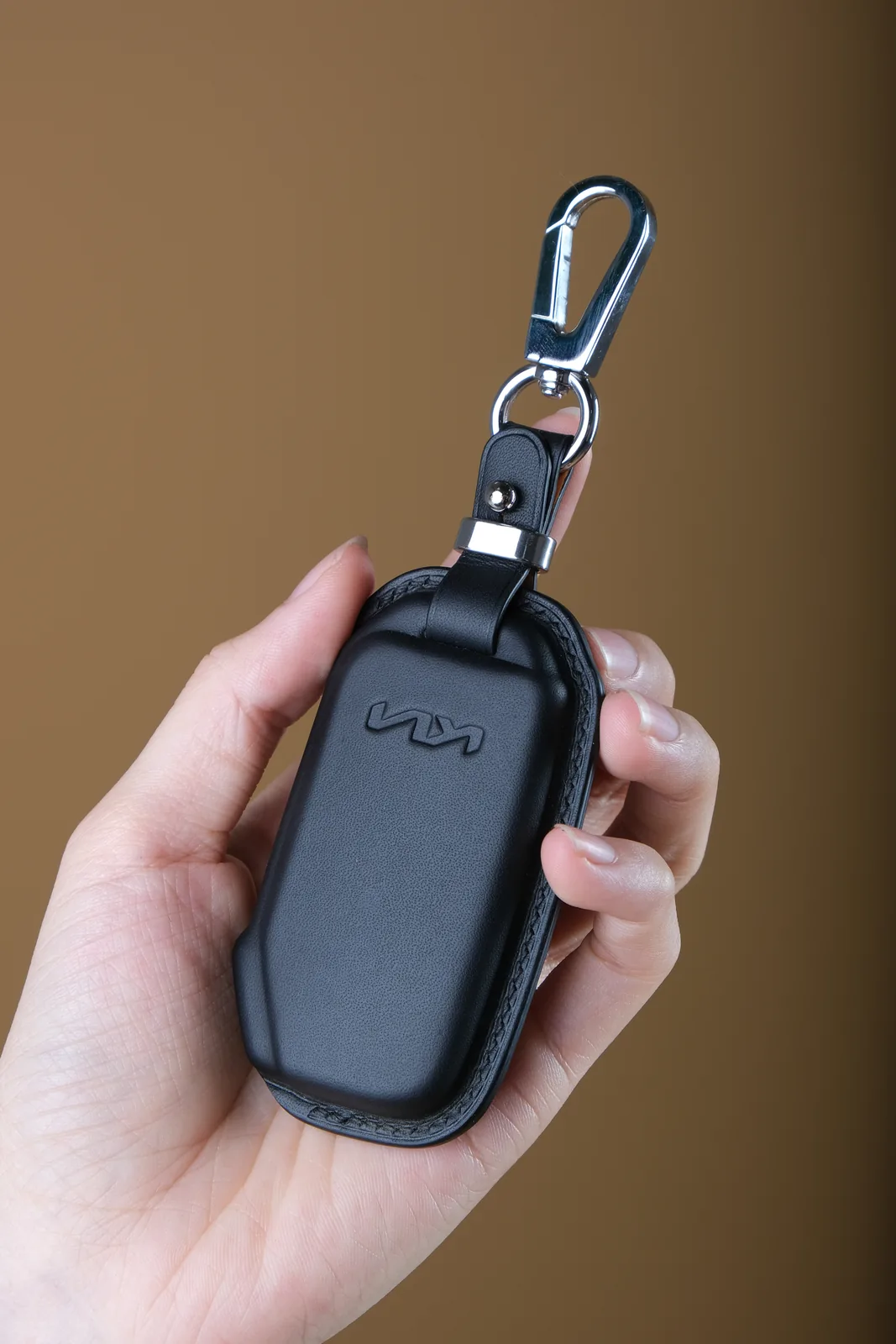
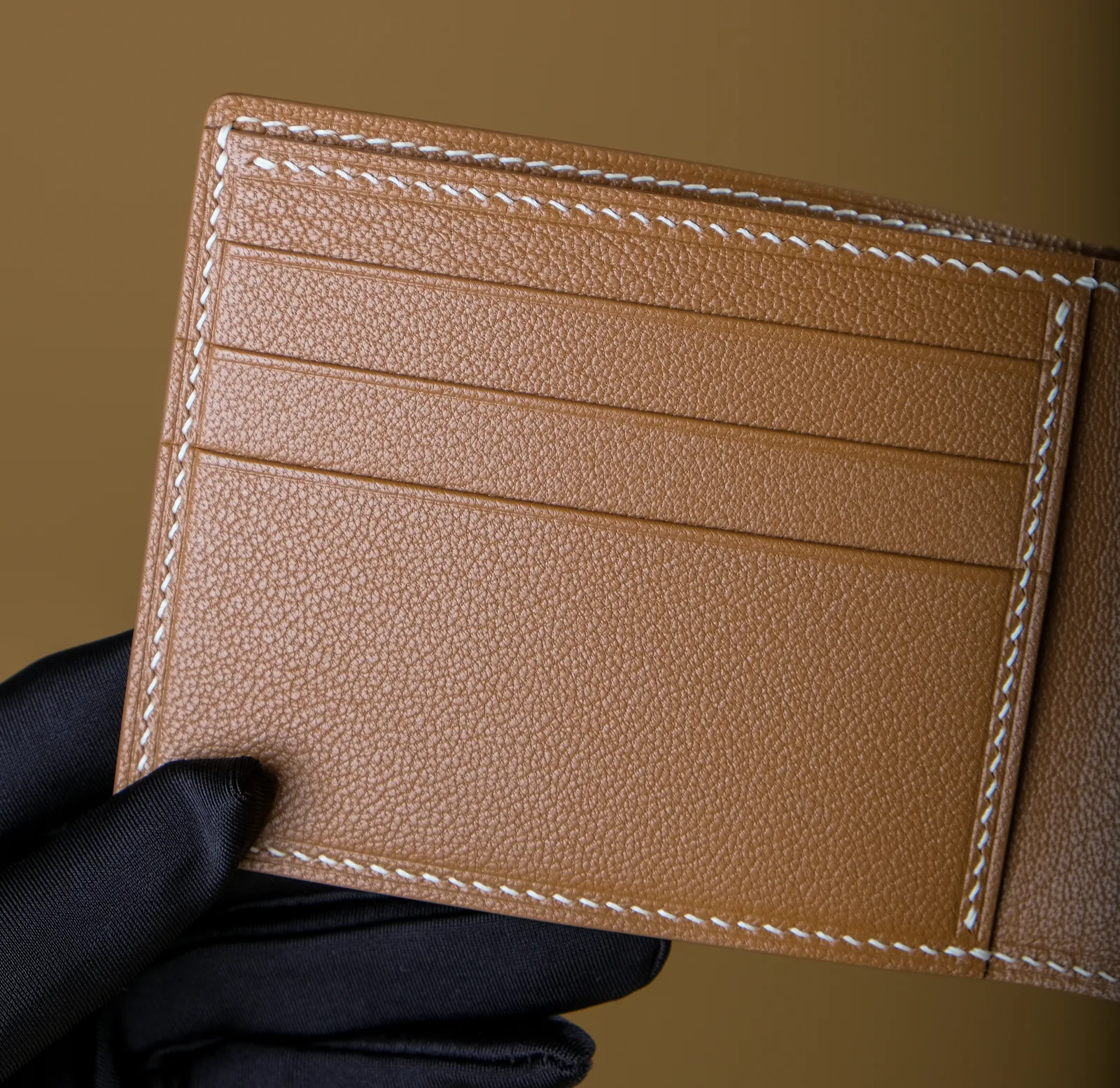
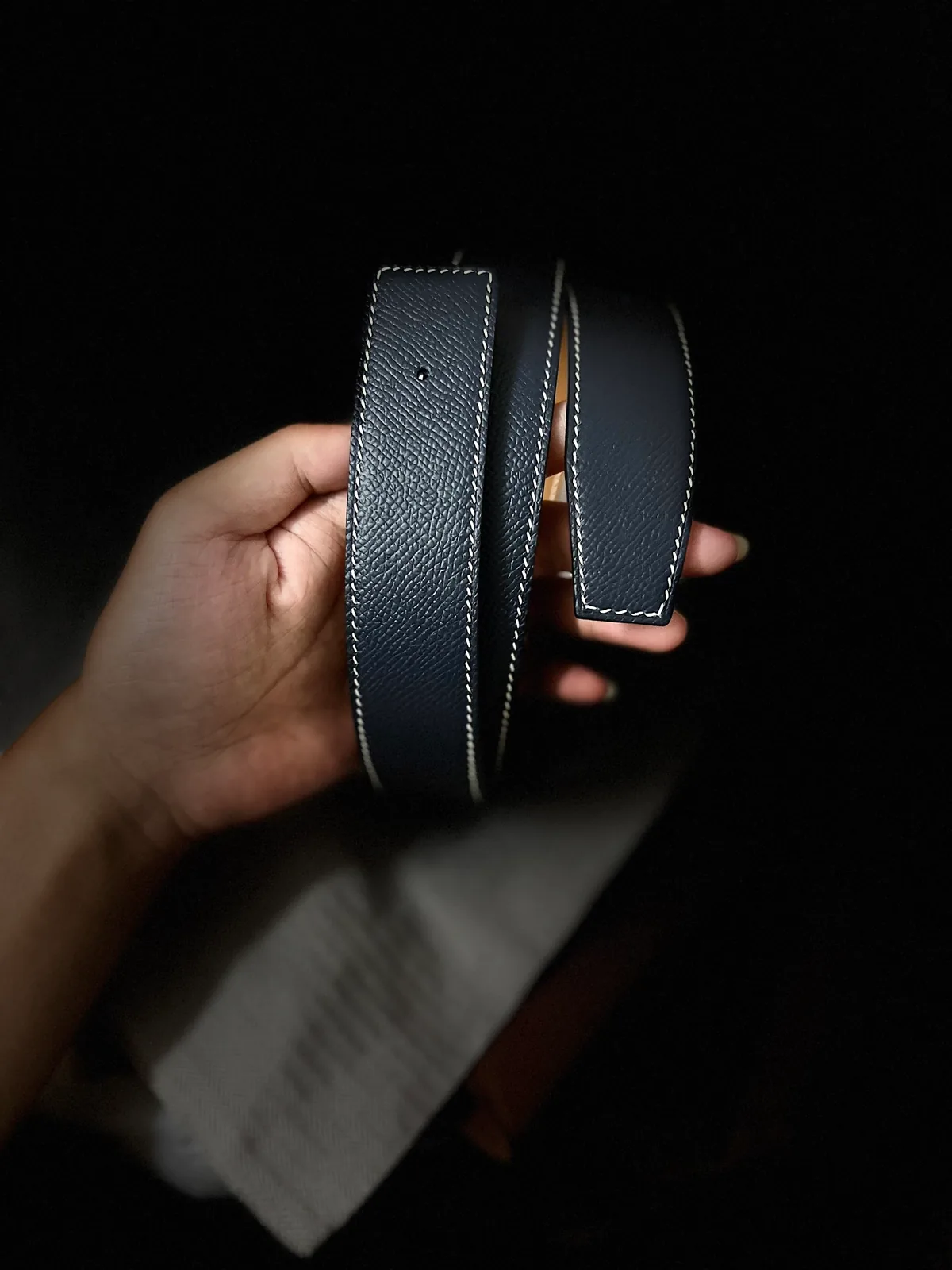
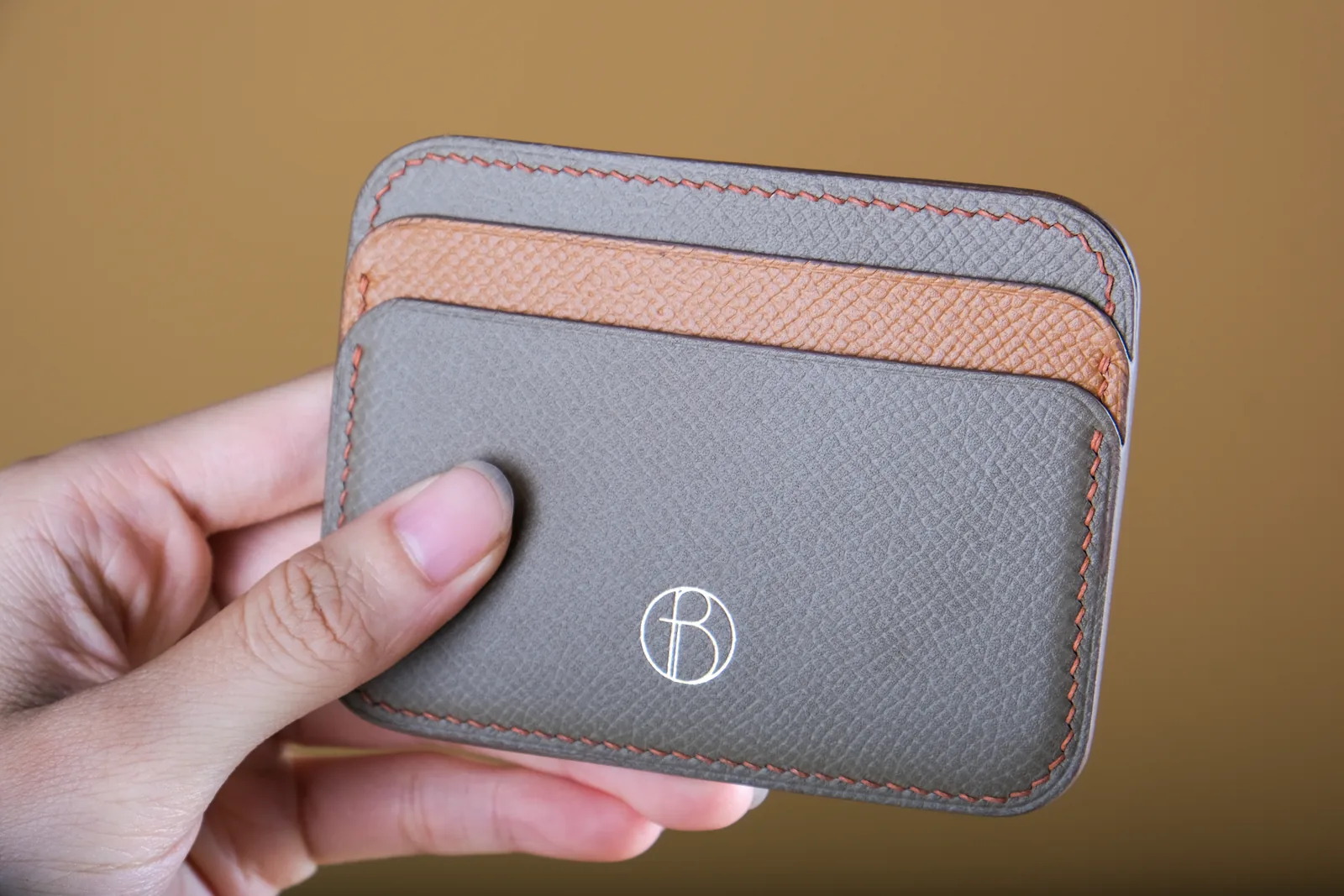
leather goods in everyday use

Collection

from hide to bag

How It's Made

Six stages, all of them under one roof. Nothing is sent out, and every seam that has to carry weight is stitched by hand.

Choose the hide

Choosing the leather is the first decision, and the only one that cannot be undone later. Everything after it — the cutting, the stitching, the edges — is work done on top of that choice.

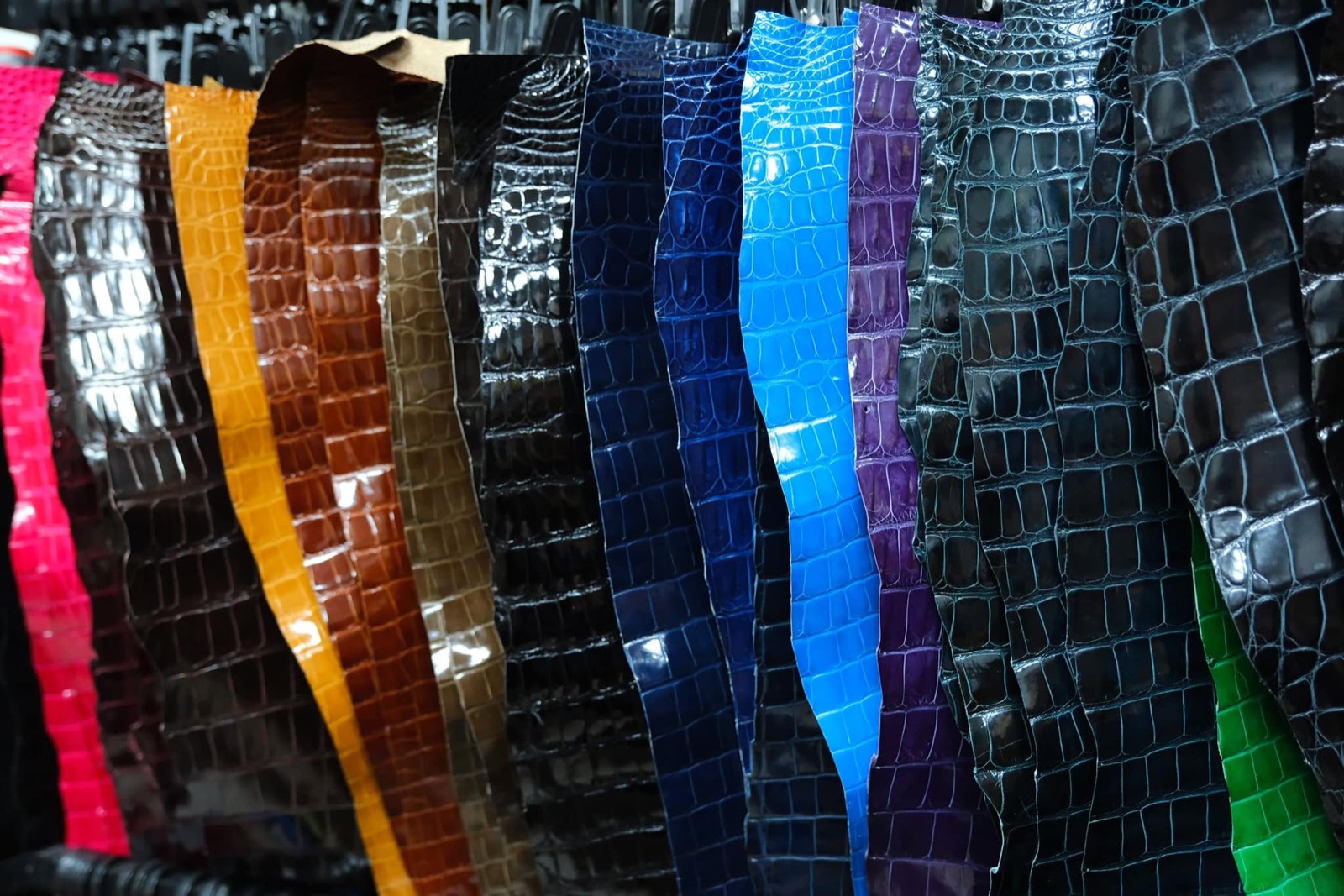
We buy full hides rather than pre-cut panels, so the pattern can be laid where the leather is firmest, working around brands, stretch marks and the loose fibre near the belly. A supplier's panel hides all of that; a full hide shows you exactly what you are working with.

Each hide is checked by hand before anything is marked on it: pulled at the edges to feel where it stretches, held to the light for thin spots, folded to see how the grain behaves. Anything we would not want on our own bag is set aside for small parts or not used at all.

Vegetable tanning keeps the leather's own character. It darkens with handling instead of wearing thin, so a bag carried for three years looks better than one still in its box.
Choose the hide

Cut the panels

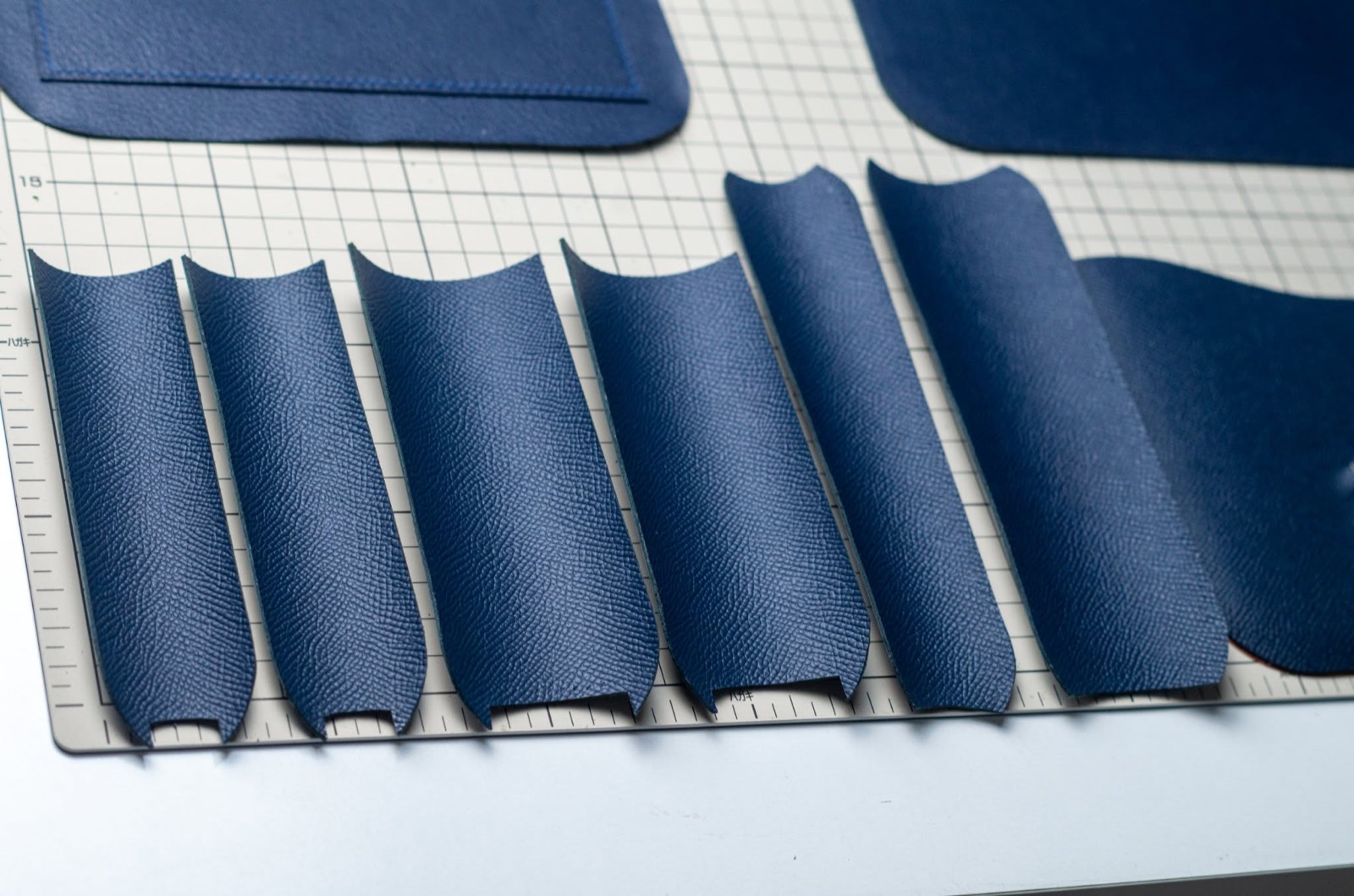
Every panel is cut by hand with a round knife, along the grain, so the leather pulls in the direction it is strongest. There is no cutting die and no clicker press: each piece is marked, checked against the pattern, then cut on its own.

The blade is stropped before every session. A sharp knife parts the fibres in one pass and leaves an edge that needs almost no sanding later; a dull one drags, and the mark it leaves stays on the finished bag.

A bag lives or dies by its base. Ours is cut from the firmest section along the spine of the hide, so it keeps its shape when the bag is full. Straps come from the same area — they carry the most weight and stretch the least.

Cutting is the one stage that cannot be corrected. A seam can be unpicked and sewn again, an edge can be re-polished, but a panel cut short is leather that goes back in the offcut box.

Cut the panels

Skive and line

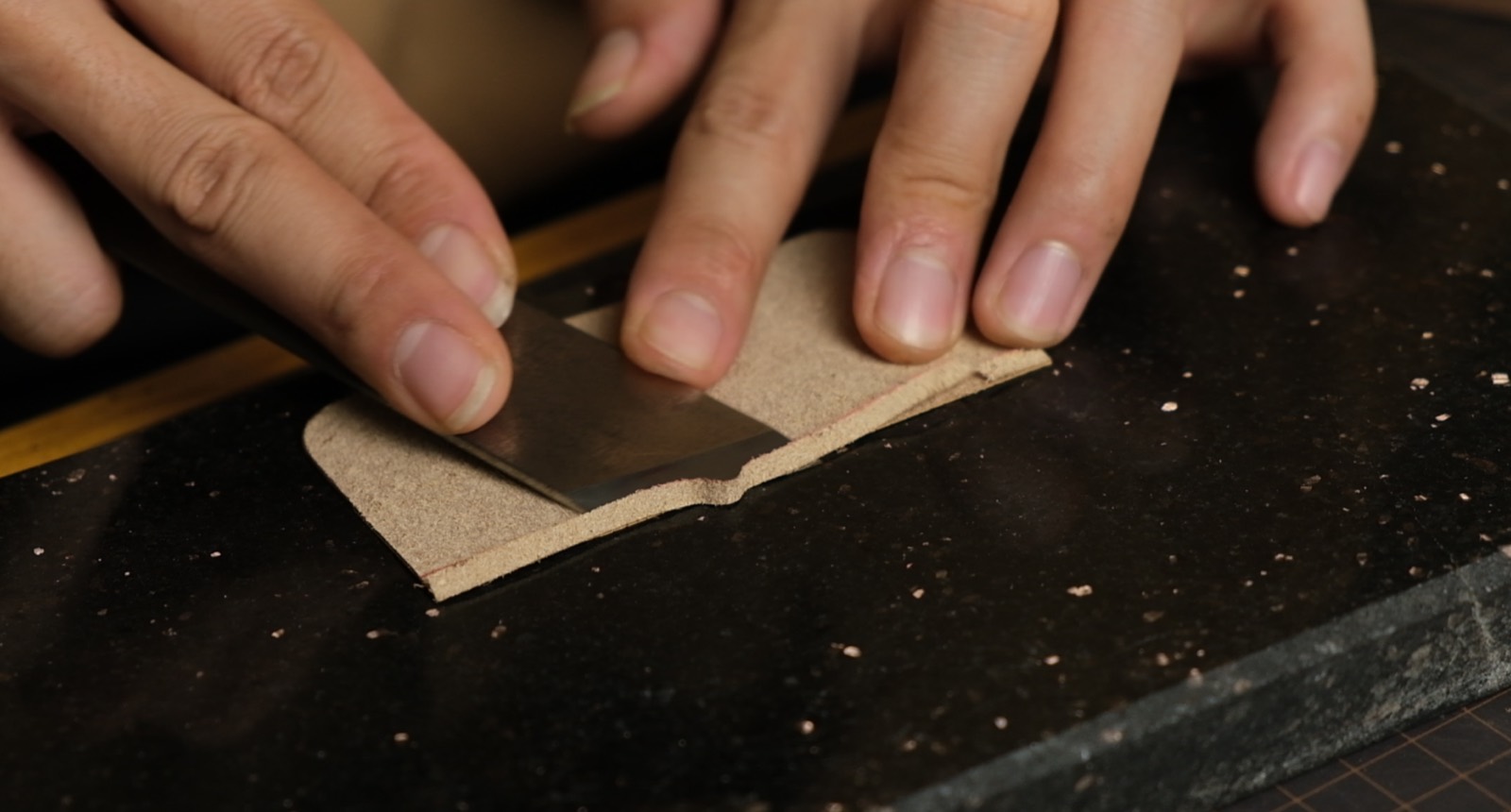
Wherever leather folds or overlaps, it is pared down by hand until the seam lies flat. Too thick and the fold cracks open; too thin and it tears. The whole judgement happens in a tenth of a millimetre, on a stone slab, with a wide flat blade.

Every turned edge, every strap end and every place two panels meet is skived before assembly. Skip it and the bag still closes, but the seams sit proud, the corners bulk out and the shape goes soft within a year.

The cotton lining is sewn in, never glued. Glue fails quietly after a year or two, while stitching announces itself long before it gives way.

The lining is cut a fraction smaller than the panel it sits against, so it sits under tension rather than rucking up in the corners once the bag is loaded.

Skive and line

Saddle-stitch

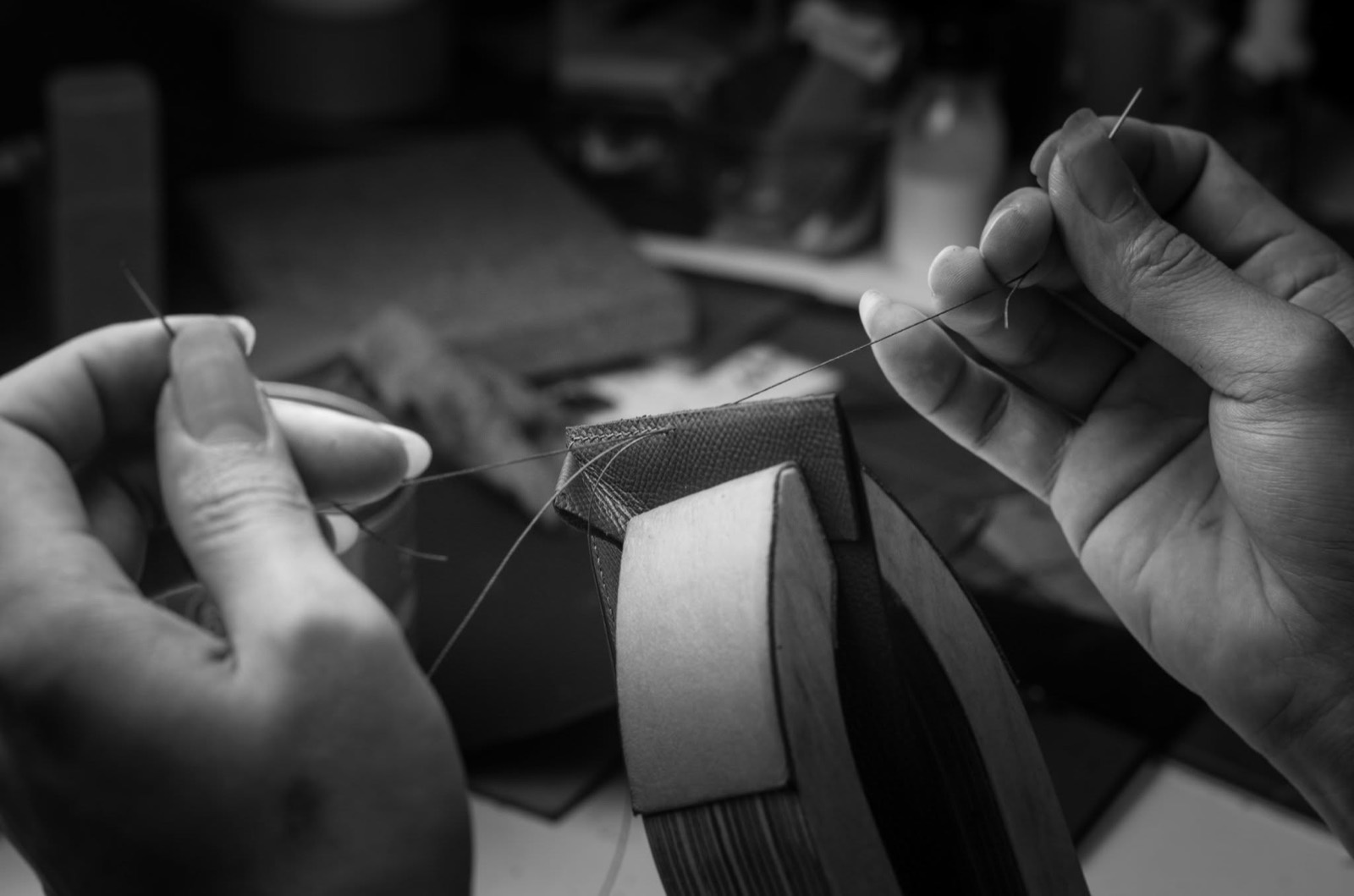
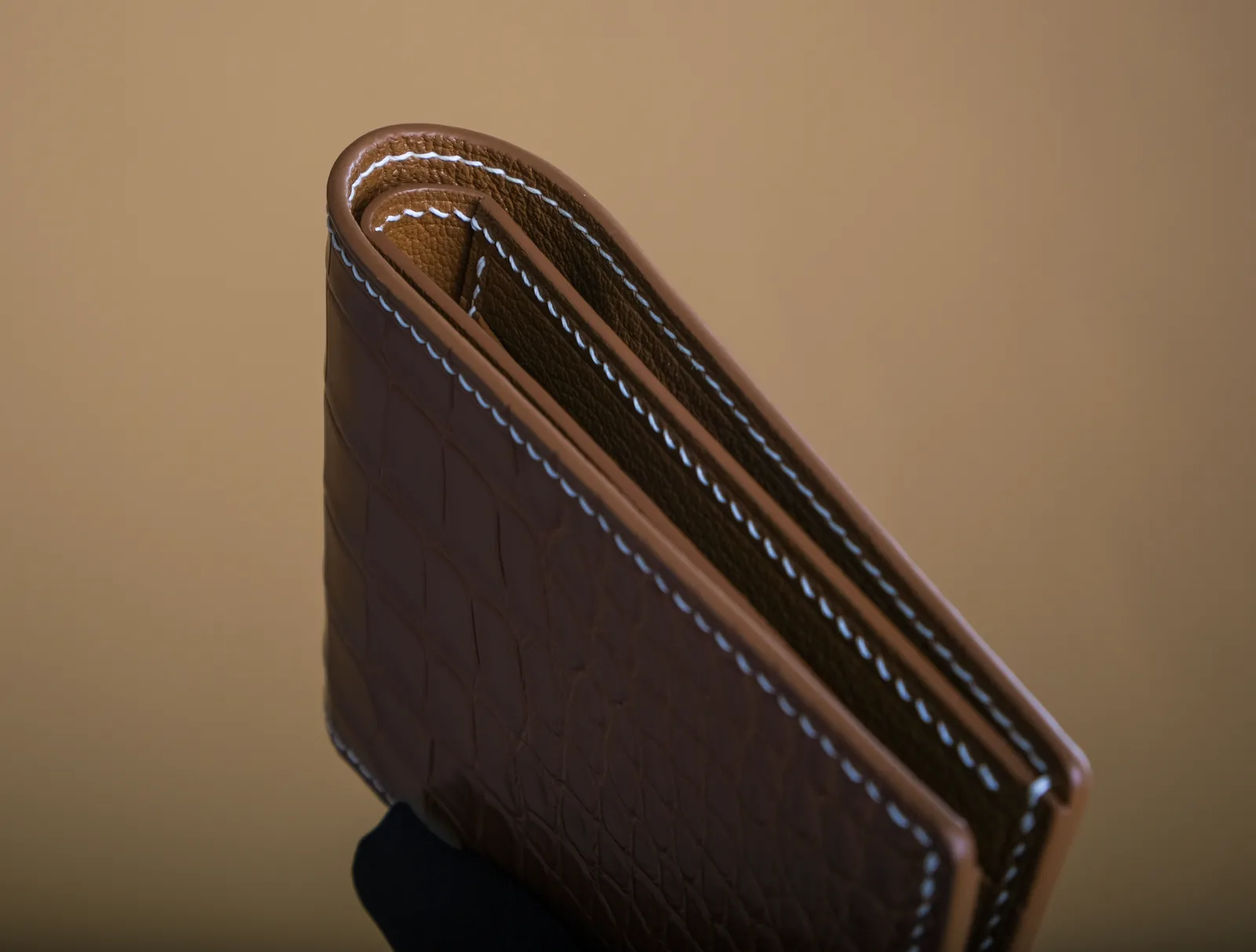
Every seam that has to carry weight is sewn by hand with two needles and a single waxed thread — the same stitch used on saddlery, and the reason a well-made bag outlives the person who bought it.

The holes are marked with a pricking iron and opened with a diamond-shaped awl, one at a time, angled so the thread lies in a neat slant across the seam. The awl work takes as long as the sewing does and decides how the finished line looks.

A machine lockstitch unravels from one broken thread. A saddle stitch does not: each stitch is locked by the one beside it, so a cut thread stays where it is, and the seam can be repaired in place rather than resewn end to end.

The seam advances about 3 mm at a time. It is slow, and it is why the stitching outlasts everything else on the bag.

Saddle-stitch

Burnish the edges

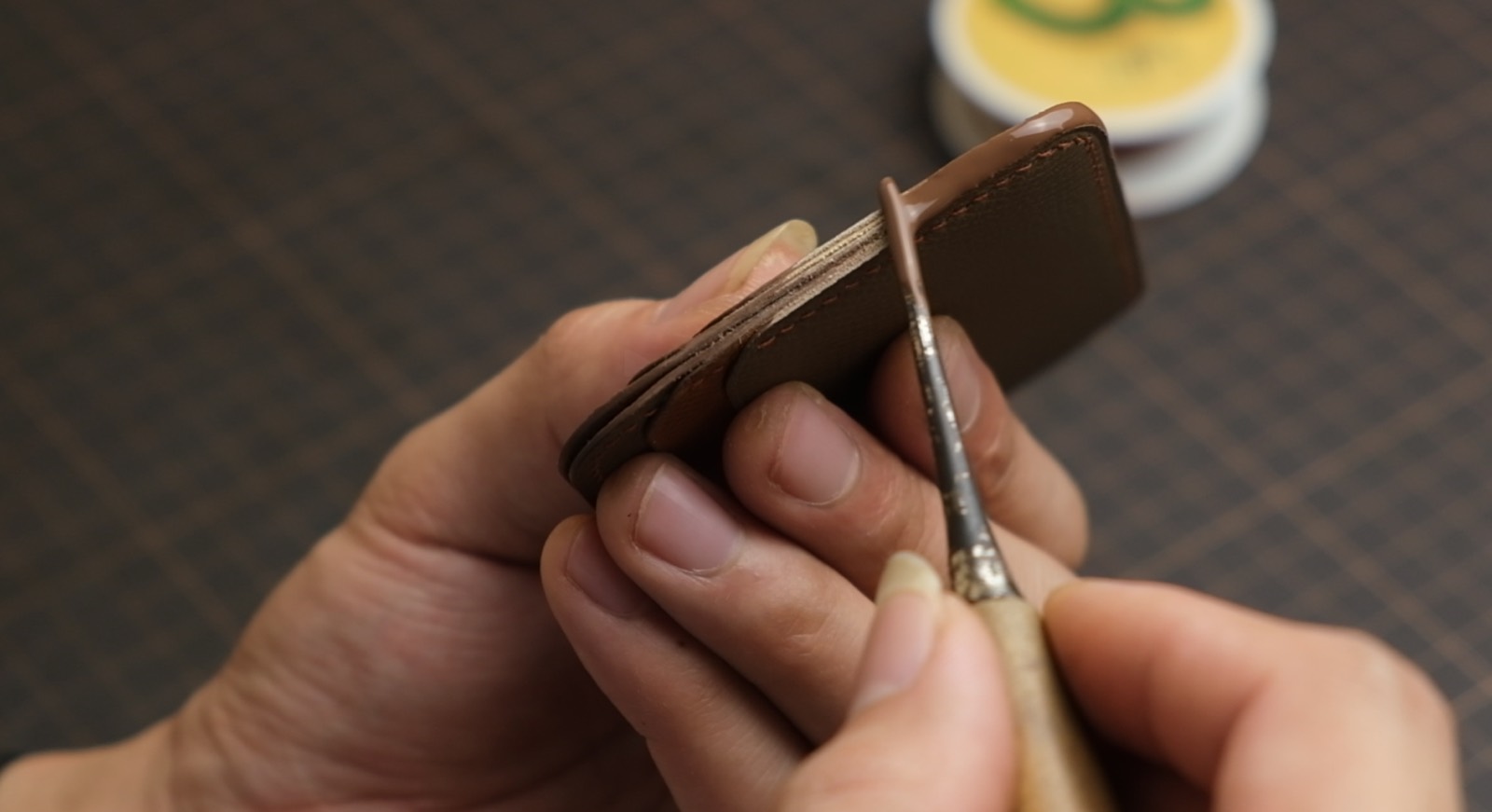
Raw cut edges are sanded through successive grits, damped, then polished by friction until the fibres lie down and close. A finished edge should feel like one solid piece, not like the stack of layers it actually is.

The cycle is repeated three or four times on every edge. Each pass closes the fibres a little further, and the last one is done slowly, by hand, with a wooden slicker until the edge takes on a shine of its own.

Edges that will be trapped inside the bag are finished first, while they can still be reached. Once the panels are stitched together, an unfinished edge in there is unfixable without cutting the seam open.

Edge work is the honest test of a maker. It takes as long as the stitching does, and it shows immediately when it has been rushed.

Burnish the edges

Check and pack

Each finished bag is loaded and carried for a day to see how it hangs, where it rubs and whether the strap sits right on the shoulder. A bag can measure correctly on the bench and still be wrong the moment it has weight in it.

Then it goes over one more time: every stitch checked along its length, hardware tightened and turned, the lining checked at the corners, the base pressed to see that it holds its shape.

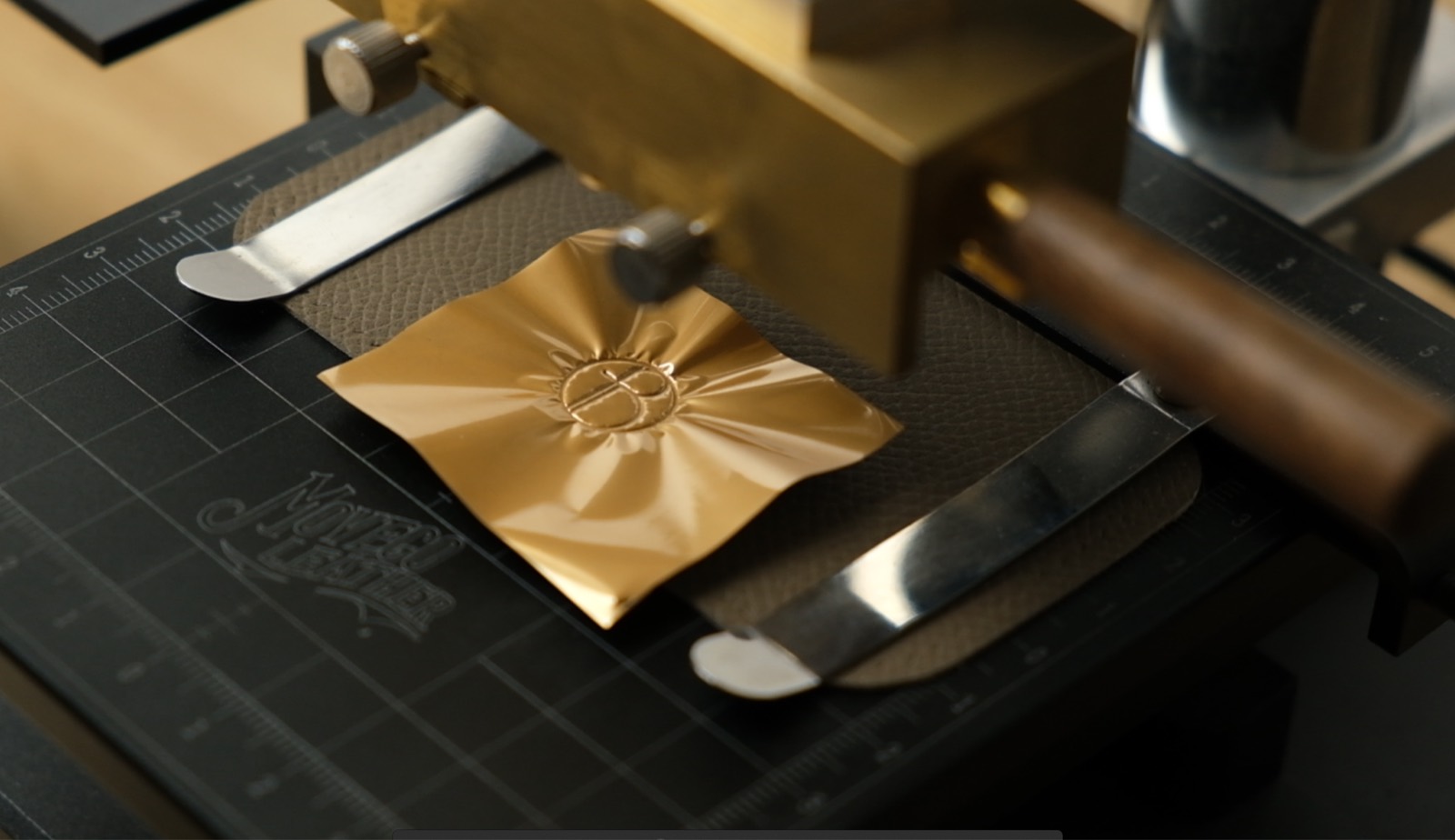
Only then is it stamped inside, wrapped in its cotton dust bag and sent, with a note of what the leather is and how to look after it.

Anything that is not right goes back to the bench rather than out to you. It costs a few days; sending out a bag we are not sure of costs considerably more.

Check and pack
how it started

About

No workshop behind me and no family trade — just a set of tools bought after graduation and a desk at home. Seven years later it is still the same pair of hands, only with more room to work in.

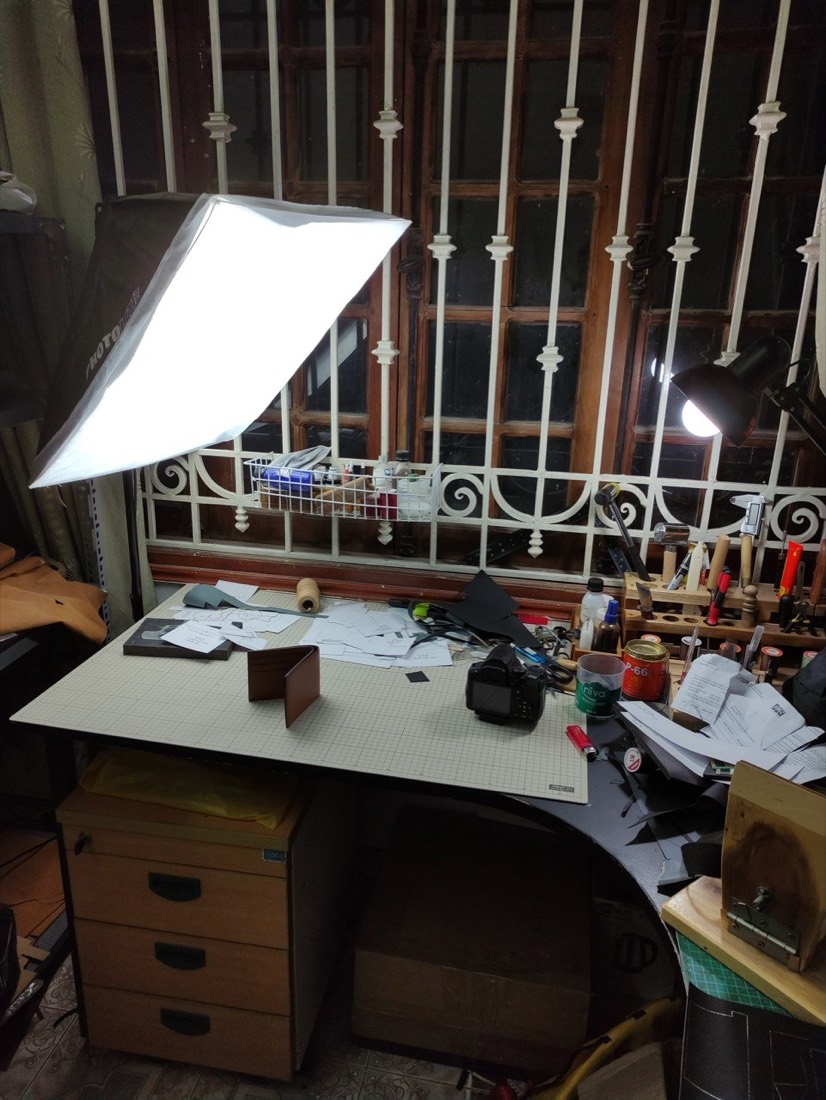
The first workbench: a desk at home by the window
2018 A desk at home, a cutting mat and a borrowed lamp.

I finished university that year with no plan to make anything. A worn-out wallet I tried to repair turned into months of reading, and by the end of the year I had bought a beginner's set of tools — a round knife, an awl, two needles and a block of wax — and cleared a desk at home to use them on. For the next three years the bags were made after work and on weekends.

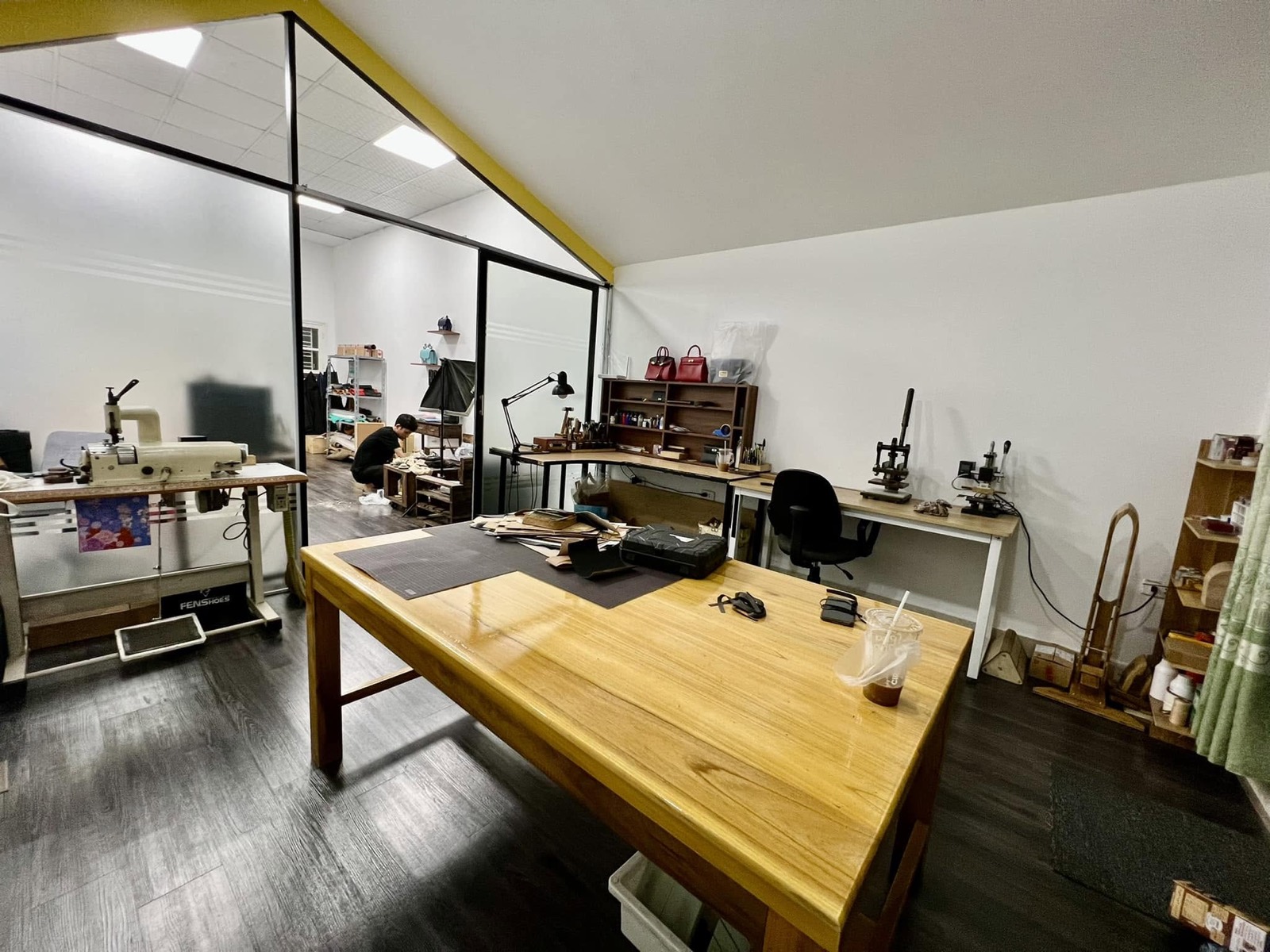
The workshop today: cutting table, stitching bench and press
2021 The workshop today — same knife, more room.

In 2021 I left my job and gave the work all of my week. The desk at home became a proper workshop, but nothing about the making changed: the same knife, the same two-needle stitch, and still one pair of hands. That is why an order takes three to six months — it is not a production line, and it was never meant to become one.

ordering is simple

How To Order

Every bag is made to order in the studio, so we arrange things by message rather than a checkout. It takes four short steps, and you can ask us anything along the way.

01
Pick your bag

Browse the pieces above and note the name and colour you want. Ask us for the current price.

02
Send us a message

Email the studio or use the form below with the bag name. Tell us what you carry day to day and we will check the size.

03
Confirm and pay the deposit

Once the bag, the leather and the final price are settled, we ask for a 50% deposit. The hides and hardware are bought for your bag straight away, so the deposit cannot be refunded.

04
We make it by hand

Making starts as soon as the leather arrives. Every bag is cut and stitched by one pair of hands, so it takes three to six months depending on the bag. We are grateful to everyone who waits for theirs.

Not sure which bag suits you?

Tell us what you carry — a laptop, a camera, a day's worth of everything — and we will suggest two or three that fit. We usually reply within one working day.

get in touch

Contact Us

Questions about sizing, leather or a repair? Write to the studio and one of us will answer — usually within a working day.

Frequently Asked Questions

The Atelier Tote takes a 14-inch laptop flat, the Sol and Verdant hold a day's things with room to spare, and the Nocturne Mini is phone, cards and keys only. Tell us what you carry and we will match it.

Keep it dry and let it darken on its own. If it gets wet, let it dry away from heat. A light conditioner once or twice a year is plenty — most bags need far less care than people expect.

Send it back within two years and we repair it free of charge, including the hardware. After that we still repair it, at cost. We would rather mend a bag than sell you a second one.

Tell us what you carry and we will point you to the right bag.